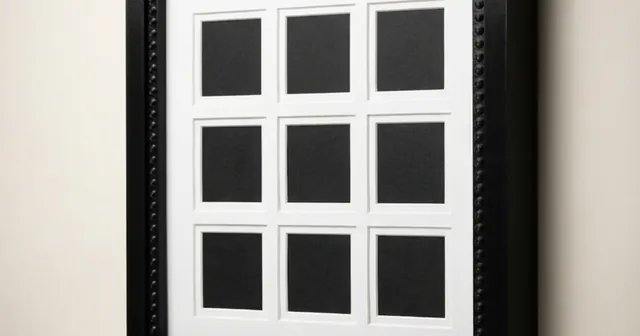
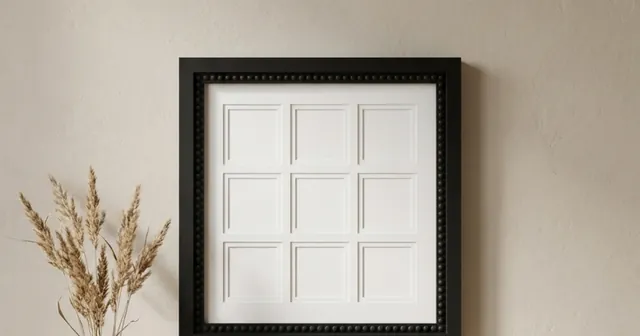
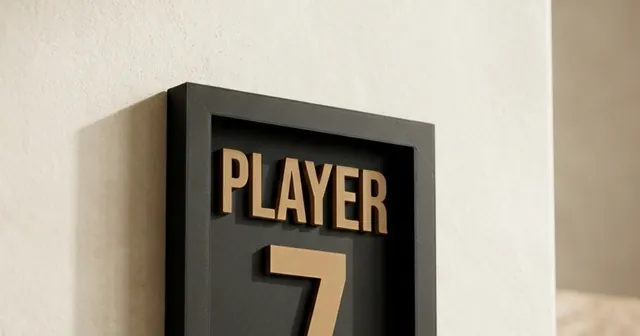
A deep frame for your art or a small object, printed to its size.
The window cut to the piece, a framer's mat, a profile you choose.
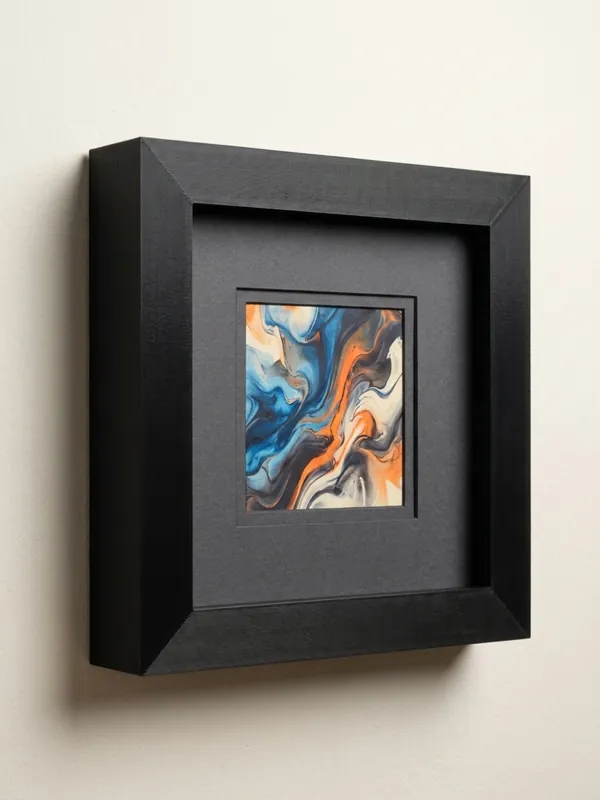
A shop frame comes in standard sizes, and the piece you want to hang rarely matches one. When you print the frame, the window is cut to the piece: a small print, a drawing, a postcard, a pressed flower or a stone. This guide shows how to frame one piece well - the mat, the depth, the profile - with the Display Frames generator.
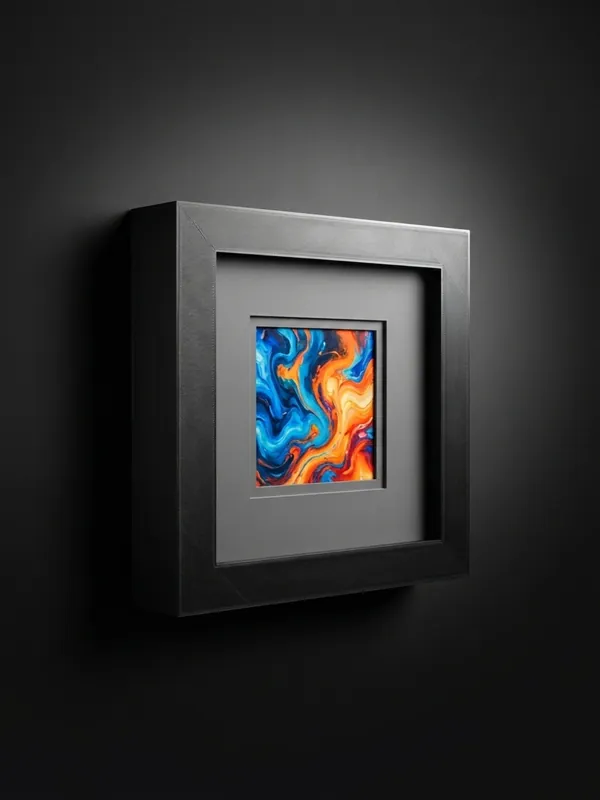
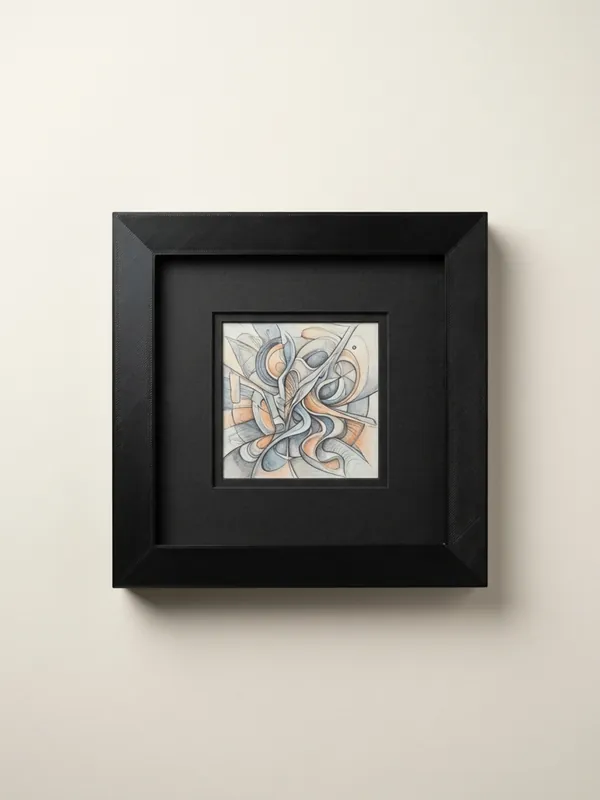
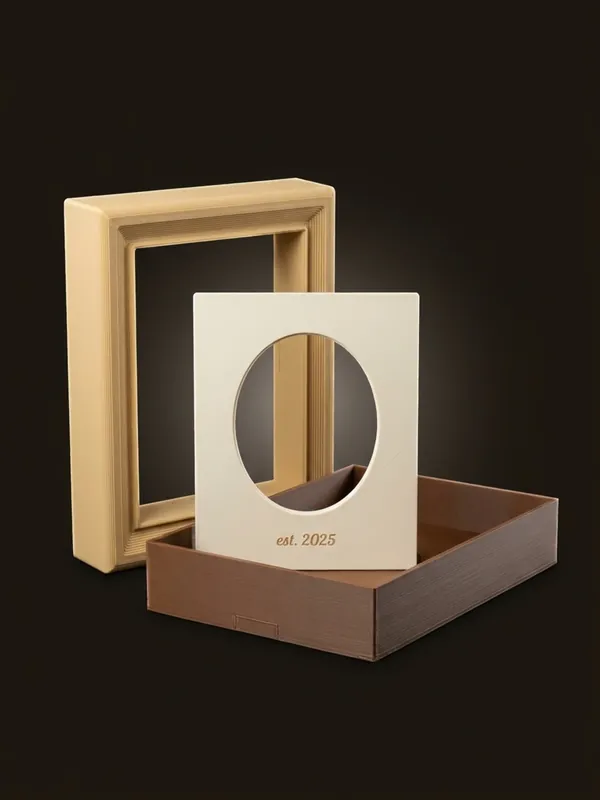
Frames made in the Display Frames generator
Size the window to the piece
Measure what shows
For a print, the part you want to see, a few millimetres inside its edges, so the mat holds the paper. For an object, its size plus a little.
Pick the shape
A rectangle for most art; an oval or an arch for a portrait or a botanical print; rounded corners for something softer.
Give it a border
A wide mat border (40 mm and up) makes a small piece look important; a narrow one keeps the frame close.
Tip.One window is the classic way to frame art. The template "One piece" starts from a single 90 x 110 mm window in a black mat.
Choose the mat
| Mat | Looks like | Best for |
|---|---|---|
| Single | A flat card with a straight cut | Modern, graphic pieces |
| Bevel | A 45 degree cut edge that catches the light | Prints, drawings, photos |
| Double | A thin second edge round each window | Making a small piece stand out; two colours |
Flat art or a small object
- A print, a drawing or a card: set the holder to none and a small depth; the piece lies on the back behind the mat.
- A small object: a pocket in the back for something loose (a stone, a shell), or a raised block to glue it onto, so it sits in the window's centre.
- Depth: 6 to 60 mm between the back and the mat - enough for the object and a little air in front of it.
Pick a profile
- Flat - a plain, modern box frame.
- Bevel - the face slopes in to the mat, drawing the eye to the piece.
- Steps - three steps down to the mat.
- Classic - a moulding with a bead at the inner edge and a cove.
- Beaded - a row of small beads round the inner step, like an old gilt frame.
Glass, caption and hanging
Glass or clear plastic up to 3 mm goes behind the frame's front: the studio gives the size to cut it to. A caption under the window - a title, a date, a name - is inlaid in the mat in a second colour. The back clicks into the frame and has two keyhole slots for two screws.
Making several frames for one wall? Keep the frame width and profile the same and change only the windows, so they read as a set.
Questions
Can I make a frame for an odd-sized print?
Yes. The window is set in millimetres, 15 to 200 mm each way, and the frame grows round it up to the 256 mm bed.
Can I frame an object, not a picture?
Yes. Set the depth inside up to 60 mm and put a pocket or a block behind the window to hold it.
Does a 3D printed mat look like a real one?
A bevelled or double mat gives the same cut edge or thin second edge as a framer's mat, printed in the colour you choose.
Do I need glass?
No. You can leave the front open, or add glass or clear plastic up to 3 mm.